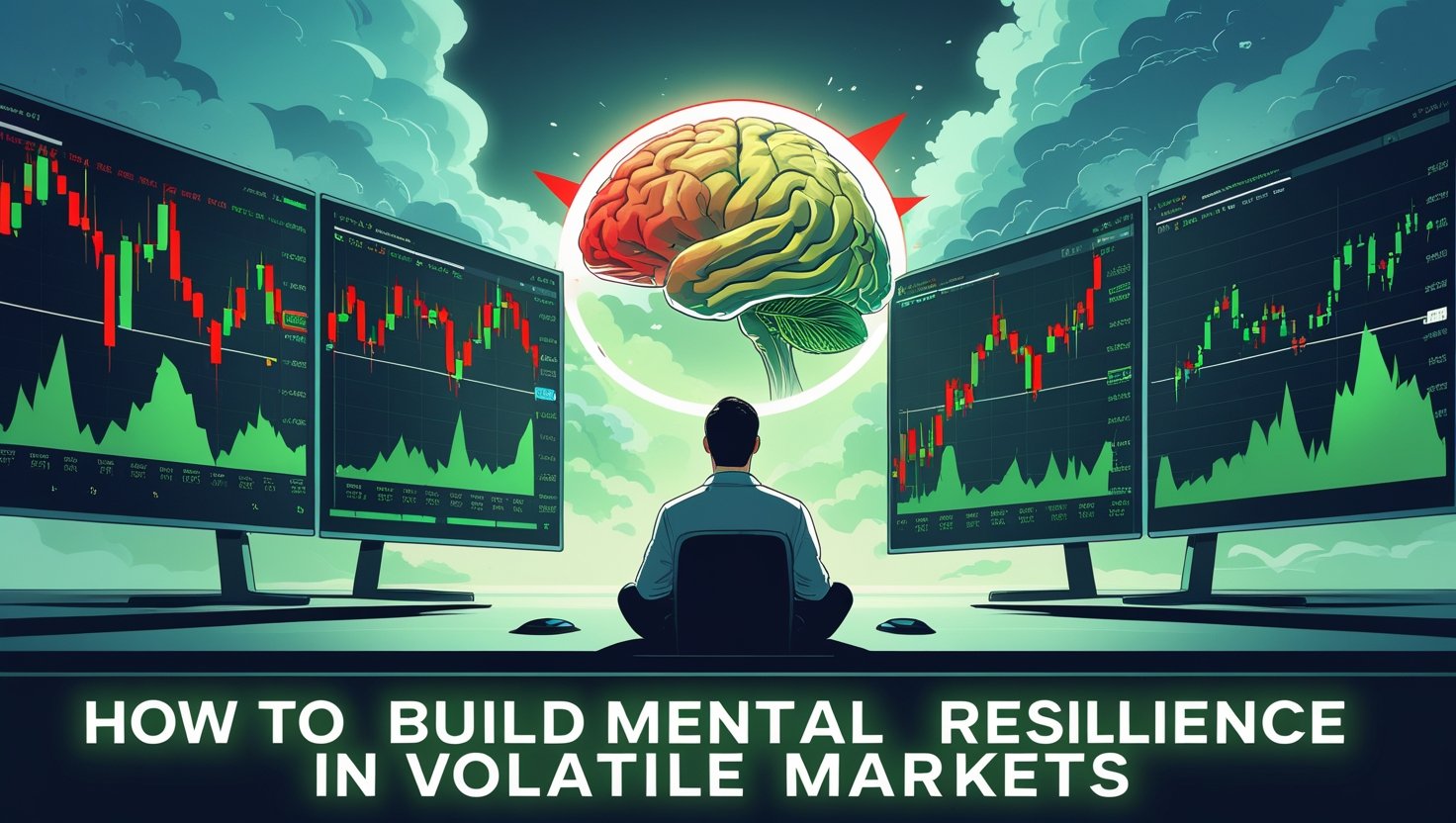
How to Build Mental Resilience in Volatile Markets:
Market volatility means that prices are moving up and down rapidly, and this is very common in markets like forex, crypto, and stocks. When the market becomes too unpredictable, it has a psychological effect on every trader. People either panic or overreact. Sometimes a person gets stressed out just by watching the market moves. This pressure forces him to make wrong decisions, like trying to cover losses quickly or taking trades without thinking. Market volatility tests the emotional control of traders.
Often, people get scared when the market goes against them, they lose confidence, and either withdraw from trading or make repeated wrong moves. This is why it is important to understand the psychological impact of market volatility. It is not just a game of numbers but also a test of mental balance. The trader who understands this pressure and prepares himself emotionally will survive for a long time. Volatile markets will always occur, but if the trader recognizes their psychological impact and finds a solution to it, they can make their strategy stronger and emotional control more stable. Understanding this is the first step towards mental resilience.
The Role of Mental Resilience in Trading Success:
Mental resilience means that you do not lose courage and know how to respond calmly even in difficult situations. Trading, especially in volatile markets, does not depend only on technical analysis or strategies; rather, the success of the trader also depends on their mental state. When the market is unpredictable, losses occur, and news or events shake the market, only those people survive who are mentally strong. Mental resilience acts like a shield that protects you from panic. When others are taking impulsive decisions under pressure, a resilient trader keeps their emotions under control. This ability makes you consistent.
Not every trade is successful, but mental resilience helps you treat every loss as a learning point. This skill keeps your long-term vision strong and helps you handle every market situation calmly. When you are emotionally grounded, your decision-making is better, and you do not fall into traps like overtrading, revenge trading, or emotional trading. A resilient trader stays focused in every situation. This trait is built over time, practice, and self-awareness. The role of mental resilience is as important to trading success as any winning strategy. Without it, long-term growth is difficult.
Identifying Emotional Triggers during Market Swings:
When the market moves up or down rapidly, everyone has a different reaction. Some people get overwhelmed, some get overly excited, and some start making impulsive decisions. These are all emotional triggers that affect trading performance. Emotional triggers are situations that elicit a strong emotional response from within you. For example, if you have faced a loss before and the market comes back to the same level, you may panic. Or if someone has recently missed a profit, they will fall prey to FOMO and trade quickly at the next opportunity. In this way, the risk increases. First, it’s important to understand your triggers.
Do you trade out of greed?
Do you trade for revenge?
Do you incur further losses in an attempt to recover quickly from a loss? Unless you notice your emotional responses, you won’t be able to control them. That’s why you should seek to reflect on your emotions after each trade. Tools such as journaling, self-talk, and slow breathing can all be helpful in this process. Identifying emotional triggers helps you become mindful. When you’re trading, you’re not just watching the market; you’re also looking inside yourself. This awareness strengthens your mental resilience and keeps you calm in volatile markets.
Practical Techniques to Strengthen Mental Resilience;
Mental resilience is not built overnight; it is the result of daily practices and discipline. If you want to handle the pressure of volatile markets, you will have to follow some practical techniques. First of all, you have to develop self-awareness. Spend some time every day observing your emotions. Doing meditation or deep breathing exercises for just 10 minutes daily calms your mind and helps you handle stress better. Journaling is another very powerful tool. After each trade, write down what your emotional state was, what went right, and what went wrong. This helps you understand your behavioral patterns. It is also important to have a routine. When your day is structured, your mind does not get scattered, and your focus increases.
Practice self-compassion after losses, and do not judge yourself. Try to learn from every mistake. Taking social support also increases resilience. If you share your feelings with your trading circle or mentor, stress is reduced. Taking care of physical health is also important because a healthy body supports a healthy mind. All these techniques seem small, but when you follow them in a consistent way, your emotional strength increases. The impact of this resilience is visible not just in trading but in every aspect of life.
Learning from Setbacks and Losses:
Losses are part of trading. Every trader, be it a beginner or an expert, faces losses at some point. But the difference is that a resilient trader does not get scared of losses, but learns from them. When the market goes against you and your plan fails, the first thing to do is to understand that this is not the end.
Every loss is an opportunity for self-reflection. At this time, ask yourself:
Was there something wrong with my analysis?
Did I react emotionally?
Should I have set a stop-loss?
When you analyze each loss calmly, you start learning from it. This approach becomes the foundation of your growth. Often, people start revenge trading after a loss, which leads to even more losses. But when you are mentally strong, you consider every setback as a lesson. This mindset makes you a long-term trader. Mental resilience teaches you to accept emotional pain. It is not possible to take profit every time, but it is important to learn something every time. When you turn every situation into a learning experience, your confidence increases. You do not need to win every time, but it is very important to improve every time. Real resilience is built through this process.
Conclusion:
Volatile markets never stop. Every day, new changes, unexpected news, and rapid price movements test traders. Only those who are mentally strong survive in such an environment. In this blog, we have seen what mental resilience is, why it is important, and how it can be developed. Understanding emotional triggers, adopting practical techniques, and learning from every loss – all these steps make a strong trader. But the most important thing is that you work on your mental strength with consistency and patience.
Trading is not just a job to earn money, but it is an emotional and psychological journey. The more you understand yourself, the more capable you will be of understanding the market. Mental resilience will not only allow you to survive but also help you thrive in a volatile environment. Today’s trader is not just an expert in charts and tools, but must also be a master of his mind. With this mindset, you can trade sustainably and stress-free. Test your emotional strength with every trade and turn every challenge into a new lesson. This is the path to real success.