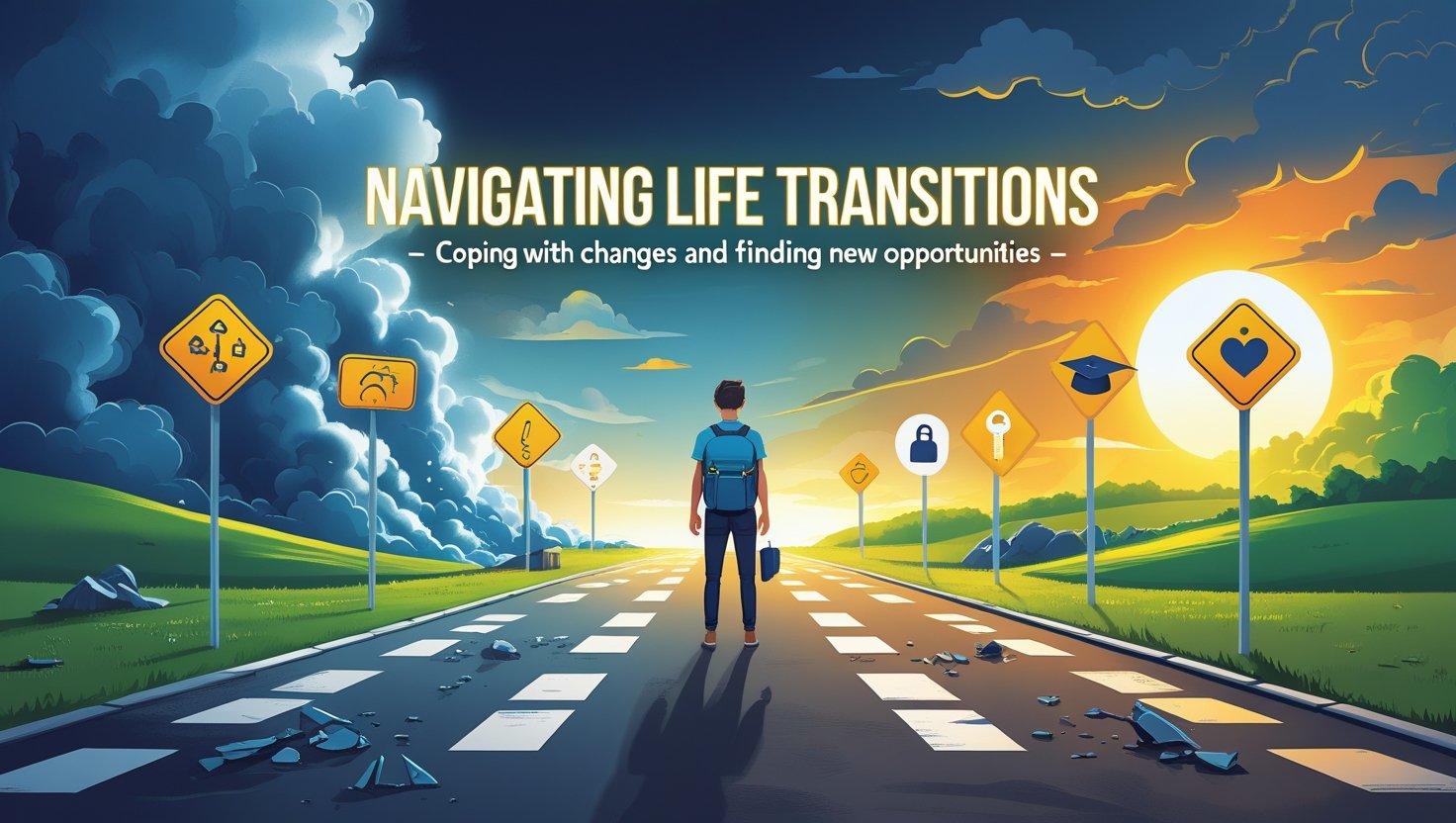
Navigating Life Transitions | Coping with changes and finding new opportunities:
In life, every person faces some such moments where everything changes. These are called life transitions. Sometimes there is a journey from school to college, sometimes one gets a new job, and sometimes one gets married or has to shift to a new city. All these moments change our routine, our thinking, and sometimes the direction of our entire lives. Life transitions are not just physical or external changes; they also have a deep impact on the emotional and mental level. Often, people get overwhelmed by these changes, and they feel as if they have lost control.
But the truth is that this change is not just a problem; it is also a new opportunity to know yourself, to set new goals, and to live life in a new way. When we start to understand that every transition is a part of life and a new chapter is attached with every change, then we can face these challenges with more courage. This introduction is to tell you, through this blog, how you can learn from these new challenges of life by accepting them and making your journey better. There is a message in every change, and if we try to understand it with an open heart and mind, then life can become easy.
Emotional Impact of Major Life Changes:
When there is any big change in life, the first impact falls on the emotions of the person. This emotional impact can be very deep, and sometimes the person does not even understand what he is going through. For example, if someone loses his job or someone moves away from his city, then in the first days he feels gloom, sadness, and loneliness. At such times, our confidence is shaken, and the fear of the future enters the mind of the person. Some people get depressed during this time, or their thinking becomes negative.
All these are normal reactions because the human mind does not accept a sudden change immediately. It is not easy for a human being to end or change things that have been a part of the routine for years. But it is also important that we do not suppress our emotions, but try to understand them. When we allow ourselves to feel sadness, cry, or talk to someone, that is the first step towards healing. Every human being has the right to understand their emotions and express them. When we express our pain and grief, we also find a way to get out of it. So don’t get scared by the emotional impact, accept it, and try to move forward.
Developing Resilience and Adaptability:
Only those people are successful in life who do not break down in difficult times but face every challenge with courage. This is called resilience, i.e., being strong from within. Resilience is not a small thing; it is such a quality that is not naturally found in everyone, but it can be developed. Whenever the direction of life changes, the most important thing is how you adjust yourself to that change. Changing your thinking and attitude according to every new situation is called adaptability. If you have moved to a new city or are working with new people, it is important to understand their environment and fit yourself into it. With every change, there are new demands, and if you are not flexible, you will be stressed all the time. Telling yourself that
“I can face every situation” is the first step towards resilience. When you see challenges as a learning experience, they no longer remain difficult for you. If you start thinking a little positively with every new day and develop the habit of finding solutions to every problem, you will slowly become adaptable and resilient. Both these qualities help you at every stage of life and make you strong.
Seeking Support from Friends, Family, and Professionals:
When any kind of change comes in life, a person feels alone, and sometimes it seems that no one understands. At such times, support is most needed, whether it is from your friends, family, or a professional counselor. Taking support is not a sign of weakness; rather, it shows that you are trying to understand your feelings and improve. Talking to friends, sharing your tensions with them can reduce your stress. Sometimes just listening to them can also make your heart feel lighter.
Family is also an emotional anchor that can support you in every difficult time. But if you feel that talking is not making a difference or your emotions are getting too intense, then meeting a professional therapist or counselor can be very helpful. He can explain to you scientifically what situation you are going through and how you can get out of it. Suppressing your feelings or dealing with them alone only increases the problems. That is why whenever there is any change in life, learn to interact with the people around you. Sometimes a small conversation or gathering can change the direction of your life, and you get the courage that you never had alone.
Turning Change into Opportunity:
Often, people get overwhelmed by the changes in life, but the truth is that every change has a new opportunity hidden within it. When one door closes, another one surely opens; you just need to look carefully. Life transitions, whether it is job loss, breakup, or relocation, there is an opportunity to learn something with each one. This is an opportunity to understand yourself again, to make new goals, and to explore your hidden skills. Every challenge has a new path that you may have never faced before.
If you have faced any change in your career, then perhaps this is the time to follow your real choice or passion. If you are going through a change in any personal relationship, then perhaps this is an opportunity for self-growth. When we look at change not just as a problem but as a chance, our energy becomes positive, and our thinking also becomes constructive. Updating your skills, meeting new people, and gaining new experiences make you more mature. Every change can be the beginning of a new story if we accept it happily and courageously. Every twist in life is a lesson, and every lesson can show us a new path, which can make us better humans and better professionals.
Conclusion:
Life never remains the same; something or the other keeps changing all the time. Sometimes there is happiness, sometimes there is sorrow, sometimes there is success, sometimes there is a new test. This is the way of life. People who understand these changes, accept them, and learn to move forward become stronger, mature, and balanced. Every transition, whether small or big, is a new chance to make yourself better. When we step into a new phase, initially we feel fear, but if we keep a positive mindset, then the same fear turns into new courage. New things in life do not just bring challenges; they also bring new people, new experiences, and new goals. Every time is not perfect, but every time something is learnt. Today, if any change is troubling you, then tomorrow the same can become your strength.
The purpose of this blog was to make you understand that you should not run away from life transitions; you should embrace them. When you consider every change as the beginning of a new journey, you learn something from every moment of life. Understanding your feelings, taking support, being flexible, and accepting new opportunities are the paths of life that take you forward. Every change is a signal of a better you, just recognize it
FAQs:
- What are life transitions, and why do they affect us so deeply?
Life transitions are major changes like shifting cities, changing jobs, starting college, getting married, or going through a breakup. These events not only change our daily routines but also affect us emotionally and mentally. They often bring uncertainty and challenge our comfort zones, which is why they feel overwhelming but can also be powerful opportunities for personal growth. - Why do people feel emotionally disturbed during life changes?
Big life changes disturb emotional stability because the human mind resists sudden shifts. Feelings of sadness, fear, confusion, or even depression are common during such times. These emotions arise because routines break and the future seems unclear. Accepting and expressing these emotions instead of suppressing them is the first step toward emotional healing. - How can resilience and adaptability help during tough transitions?
Resilience means inner strength to face challenges without breaking down. Adaptability is the skill to adjust quickly to new situations. Together, these qualities help you face life transitions with courage, stay mentally strong, and grow from every challenge. These traits can be developed by changing your mindset, staying flexible, and focusing on solutions rather than problems. - Is it okay to seek support during life changes?
Absolutely. Talking to friends, family, or a professional counselor during transitions is a healthy and helpful step. Support systems reduce stress and offer clarity. Seeking help doesn’t show weakness—it shows that you value your mental and emotional well-being and are taking action to stay balanced. - Can change really be an opportunity rather than a problem?
Yes, every life change carries a hidden opportunity—whether to grow, learn, start over, or pursue passions. When one phase ends, a new one begins. By staying open-minded and positive, you can turn challenges into stepping stones and use them to become a stronger, more self-aware version of yourself.